Blogs Breast Reconstruction: Restoring Confidence After Cancer drritikabhandari • September 26, 2025 Introduction For many …
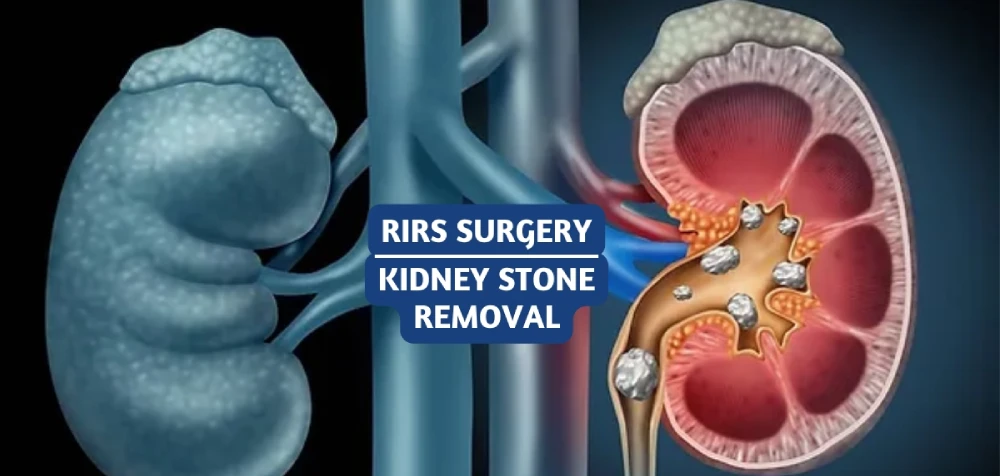
Endoscopy with laser removal is a minimally invasive urological procedure used to treat urinary tract stones, strictures, and other obstructions within the kidney, ureter, or bladder. This advanced procedure combines the precision of endoscopic visualization with the power of laser energy to fragment or remove stones and diseased tissues without the need for open surgery.
It is commonly recommended for patients with ureteric stones, bladder stones, kidney stones, or urethral strictures, offering faster recovery and minimal discomfort compared to traditional surgical methods.
Several factors may contribute to the formation of stones or blockages in the urinary tract:
Dehydration – Insufficient fluid intake can lead to concentrated urine, increasing stone formation.
Dietary habits – High intake of salt, protein, or oxalate-rich foods can trigger kidney stone formation.
Genetic factors – A family history of kidney or bladder stones may increase your risk.
Urinary tract infections – Chronic infections can lead to the buildup of mineral deposits.
Metabolic disorders – Conditions like gout, hyperparathyroidism, or obesity can promote stone formation.
Patients requiring endoscopy with laser removal may experience one or more of the following symptoms:
Severe flank or lower abdominal pain
Blood in urine (hematuria)
Frequent or painful urination
Nausea or vomiting
Urinary tract infections due to blockage
Difficulty passing urine or reduced urine flow
Your urologist may recommend endoscopic laser treatment if:
Stones are too large or hard to pass naturally
There is recurrent urinary tract infection due to blockage
You have persistent pain or obstruction
Other non-surgical treatments have failed
A minimally invasive option is preferred over open surgery
Here’s what the procedure typically involves:
Anesthesia – The procedure is done under local, spinal, or general anesthesia depending on the case.
Endoscopic access – A thin, flexible endoscope is inserted through the urethra to reach the stone or obstruction.
Laser fragmentation – A laser fiber is used to precisely break down the stone or tissue into fine particles.
Stone extraction – Small fragments may be removed using a basket or allowed to pass naturally through urine.
No external cuts – The entire procedure is performed through natural urinary passage, ensuring no visible scars.
Most patients can go home the same day or the next day after surgery.
Mild burning or discomfort during urination is common for a few days.
Increased water intake is recommended to flush out small residual fragments.
Avoid strenuous activity for about a week.
Follow-up appointments help ensure complete stone clearance and healing.
1. Is laser endoscopy painful?
No, the procedure is performed under anesthesia, ensuring you remain pain-free. Mild discomfort may occur afterward, but it subsides quickly.
2. How soon can I return to work after the procedure?
Most patients resume normal activities within 2–5 days, depending on the stone size and overall recovery.
3. Will there be any scars?
No, since the procedure is done through the natural urinary passage, there are no external cuts or visible scars.
4. Can stones come back after laser removal?
Yes, stones can reoccur if preventive measures are not taken. A proper diet, hydration, and follow-up care can significantly reduce recurrence.
5. Is hospitalization required?
Usually, it’s a day-care or short-stay procedure, and most patients are discharged within 24 hours.
Blogs Breast Reconstruction: Restoring Confidence After Cancer drritikabhandari • September 26, 2025 Introduction For many …
Urinary Problems in Male and Female Patients What Are Urinary Problems? Urinary problems refer to …
RIRS with laser removal What is RIRS (Retrograde Intrarenal Surgery)? RIRS (Retrograde Intrarenal Surgery) is …
PCNL (Percutaneous Nephrolithotomy) What is PCNL? PCNL (Percutaneous Nephrolithotomy) is an advanced minimally invasive surgical …

Dr. Swapnil Gholap practice emphasizes accuracy in diagnosis, transparency in communication, and personalized treatment plans tailored to each patient’s needs.